Mastermind Circles
Community Engagement · · 6 min readAs a member of the 2024-2025 Cornell Engineering Leadership Certification Program, my team and I (dubbed The Liberators) set out to create, market and run a Mastermind Circles program at Cornell! This was a 10-week program in the Spring of 2025 where ourselves and 17 other students and ourselves set challenging personal and professional semester-long goals. Goals ranged from running a YouTube channel, creating a video game, and improving work-life balance.
Did Mastermind Circles work? The answer: YES!!!! All 21 members reported making significant progress towards their goals! Here, “significant progress” meant three things:
- Achieve the goal, or taking major steps towards it.
- Understanding what works or doesn’t work in helping onself achieve a difficult goal.
- Not giving up easily, with encouragement from others and personal grit.
“By setting good goals for myself and by consistently coming to mastermind circles, I can inspire real change in myself that I never thought possible.” — Anonymous
“The program was more helpful than other programs I have done trying to achieve the same goals… including 1:1 coaching.” – Anonymous
“Tackling our shared mindsets is what changed me. Being able to push myself for others and for them to push me was the relationship that made the difference.” — Anonymous
Who is this for? For the students that has a difficult personal goal who normally wouldn’t share the burden to others, and they need a place for support and advice. Our goal was create circles of students that all care for each other, check in with each ever week, and practice tools and systems to help set and achieve goals.
Team Effects: Even the Liberators as a whole benefitted from Mastermind Circles; we practiced the same principles: we used our debriefs to celebrate wins and gather concerns and feedback. Using that, we’d be able to set our own goals to become better facilitators, and to create a better Mastermind Circle experience.
Personal Effects: I gained a lot from Mastermind Circles. I slowly opened up to my circle, learned how to ask for help and advice about research, bit by bit making progress on becoming a better research: I started figuring out that “setting how many hours I’ll do research” doesn’t work for me, and instead we were able to figure out what actually matters. The environment I work best in (quiet, public space), lessening time commitments that weigh me down, and calibrating my expectations in research from “a good researcher is suposed to make amazing breakthroughs all the time” to “good research takes its time and no breakthrough will happen as long as I’m worrying about not having a breakthrough.”
Ingredients of Successful Mastermind Circles Wondering about how to do this yourself? Or maybe want to take parts and pieces for your own usage?
- Find people that care.
Mastermind Circles is people-driven, so it’s important that members want to put in time to help both themselves and others. Then the goals that member set really have weight because others care about it. Keep in mind that we aren’t making any statement like “this program is magic and works for everyone.”
- Meet regularly in a comfortable space.
This becomes like a second home, where people can physically go and focus, and feel connected and safe. Also be consistent in time and place.
- Share goals.
The act of stating the goal is the first step in working to achieve it. And this builds openness.
- Discuss; Focus on the WHY behind the goal, what’s working and what’s getting in the way.
We’re NOT forcing a perspective on others. We work with wherever everyone’s at, and it’s more productive to focus on the goal-setter’s own motivations, thoughts and behaviors. The focus is long-term growth and development for each person—eventually everyone will leave the program, and hopefully will be able to independently be able ot achieve their goals more.
- Set SMART goals (specific, measurable, actionable, relevant, time-bound).
This is the fundamental tool! We need SMART goals to hold each other accountable on subsequent circle meetings.
- Don’t let others off the hook when they don’t accomplish the SMART goal.
If “well, I almost did it…” is allowed, then this could lead to more complacency. We setting a foot down and stating that a person did not achieve their goal (NOT in a shaming way), we start to frame the conversation towards “Okay, why did this not work for you?” and “What are you doing differently so you can make progress?”
- Each week, teach and practice a specific goal-setting/achieving tool.
Other than SMART goals there are plenty of other tools. Such as: personal values, high bar/low bar SMART goals, over/under committing, question storming, yes/no charts, inner saboteur. Like how a chef can’t cook without ingredients; we can’t set good goals without rules and structure.
- Check in with each other outside of meeting
It can be nice to be connected outside of the meeting!
- Have your own goal; being a facilitator doesn’t make you above Mastermind Circlesl; you are a member, too
Facilitation means you set the structure, but you don’t lead most discussions. In fact, having your own goal, being open to feedback and advice show the value of Mastermind Circles, and leads to more trust.
- Have some end-of-program incentive, like a certificate if had good attendance.
One of the trickiest questions is how to members to attend week after week. Members should already be incentivized to attend because of the community and opportunity to learn a new tool, but also having a certificate at the end serves well.
- Keep groups small: ~3-5 people.
If there are more people, it can be hard to have a discussion where everyong can contribute. 3-5 people is the right number so that everyone can have a turn. Also recommend 1-2 hours meeting per week.
Other Lessons: Email blasts are really effective for college students. Sending personalized, succinct emails shows care and draws people in.
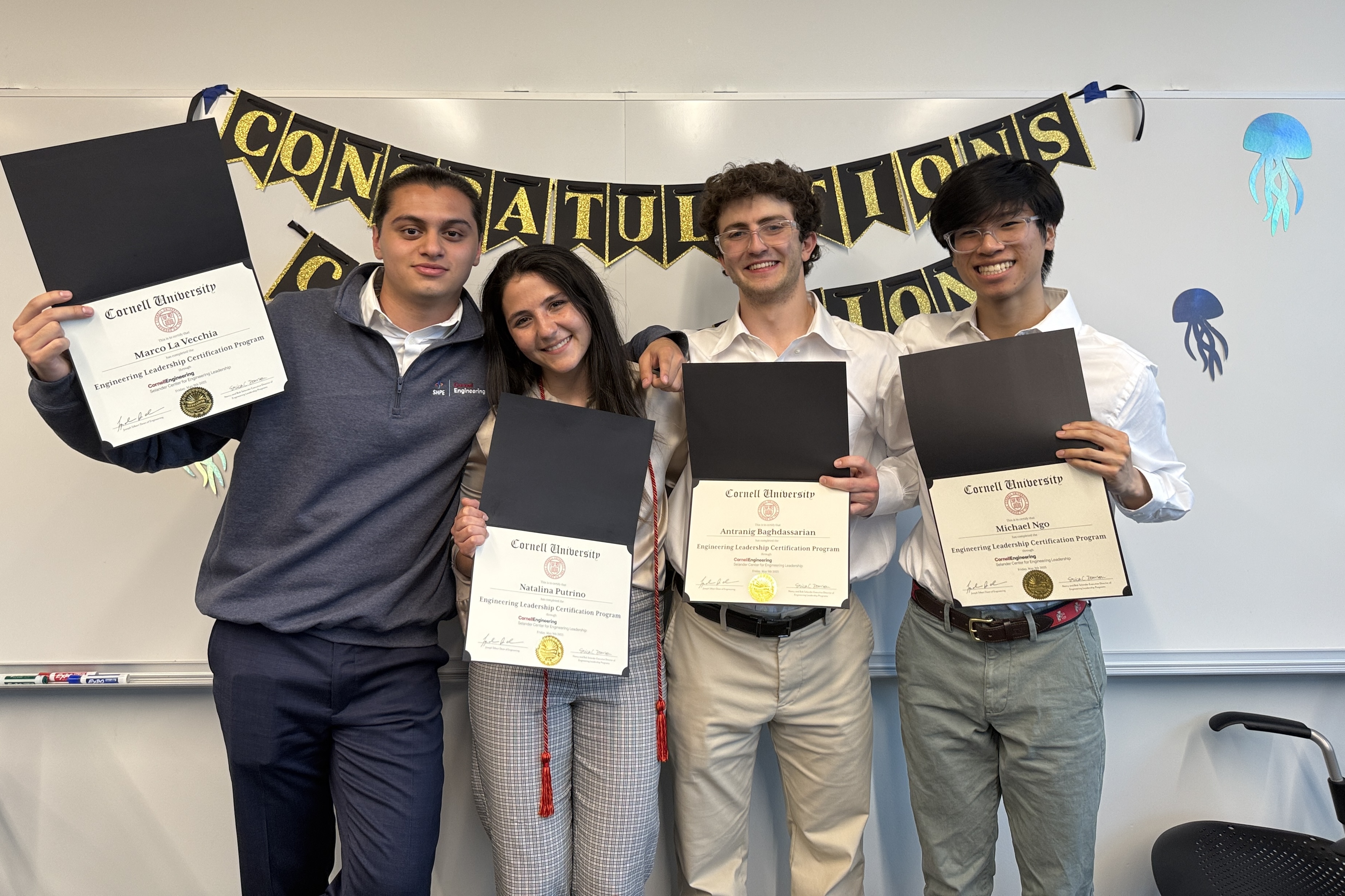
Acknowledgements: I would like to thank my fellow Liberators: Antranig Baghdassarian, Marco La Vecchia, and Natalina Putrino for all the amazing work they put into the Liberators and Mastermind Circles. Thanks to the 17 other members of our Mastermind Circles. Thanks to the rest of the Engineering Leadership cohort, Engineering Leadership TAs, as well as the instructors Erica Dawson, Rob Parker and Karel Hilversum for excellent coaching and feedback. Special thanks to Myrian Alarcon, Myra Phillips, Dan Toronto, and Karen Williams.